- Home
- Community Blog
- Why Your Rash Guard Rides Up (And How to Choose One That Doesn’t)
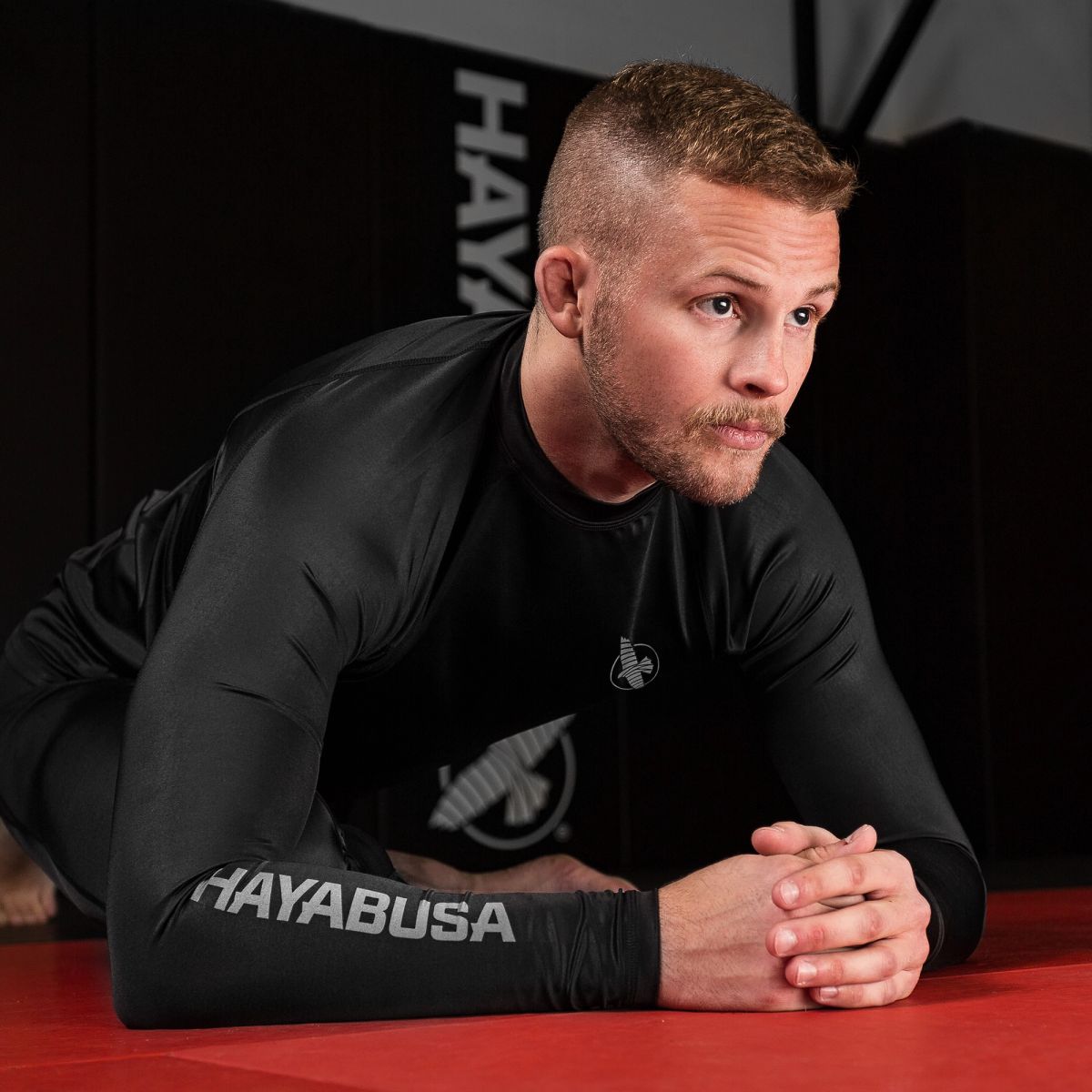
Why Your Rash Guard Rides Up (And How to Choose One That Doesn’t)
Rash guards are essential gear for BJJ, MMA, grappling, and other combat sports, but nothing is more distracting than a rash guard that keeps riding up. Constantly adjusting your top can interrupt your flow, reduce your focus, and even affect your performance during training. Knowing why this happens and how to choose a rash guard that stays in place will make your sessions more comfortable, effective, and enjoyable.
Why Rash Guards Ride Up
Understanding why a rash guard rides up is the first step toward preventing it. Several factors contribute to this common problem:
- Material stretch and elasticity: Rash guards are made to stretch and compress around your body. However, fabrics with too much elasticity—or ones that are worn out—may ride up your torso during dynamic movements like shrimping, guard passes, or takedowns.
- Improper sizing: Picking the wrong size is a common mistake. A rash guard that’s too large will slide and bunch, while one that’s too tight can ride up as your body moves. Striking the right balance between snug and comfortable is crucial.
- Loose fit around chest, shoulders, or waist: Rash guards should contour your body, particularly around the chest and waist. Loose areas allow the garment to shift during rolling or high-intensity drills, causing constant adjustment.
- Repeated washing and wear: Over time, even high-quality rash guards can lose their elasticity, making them more prone to riding up.

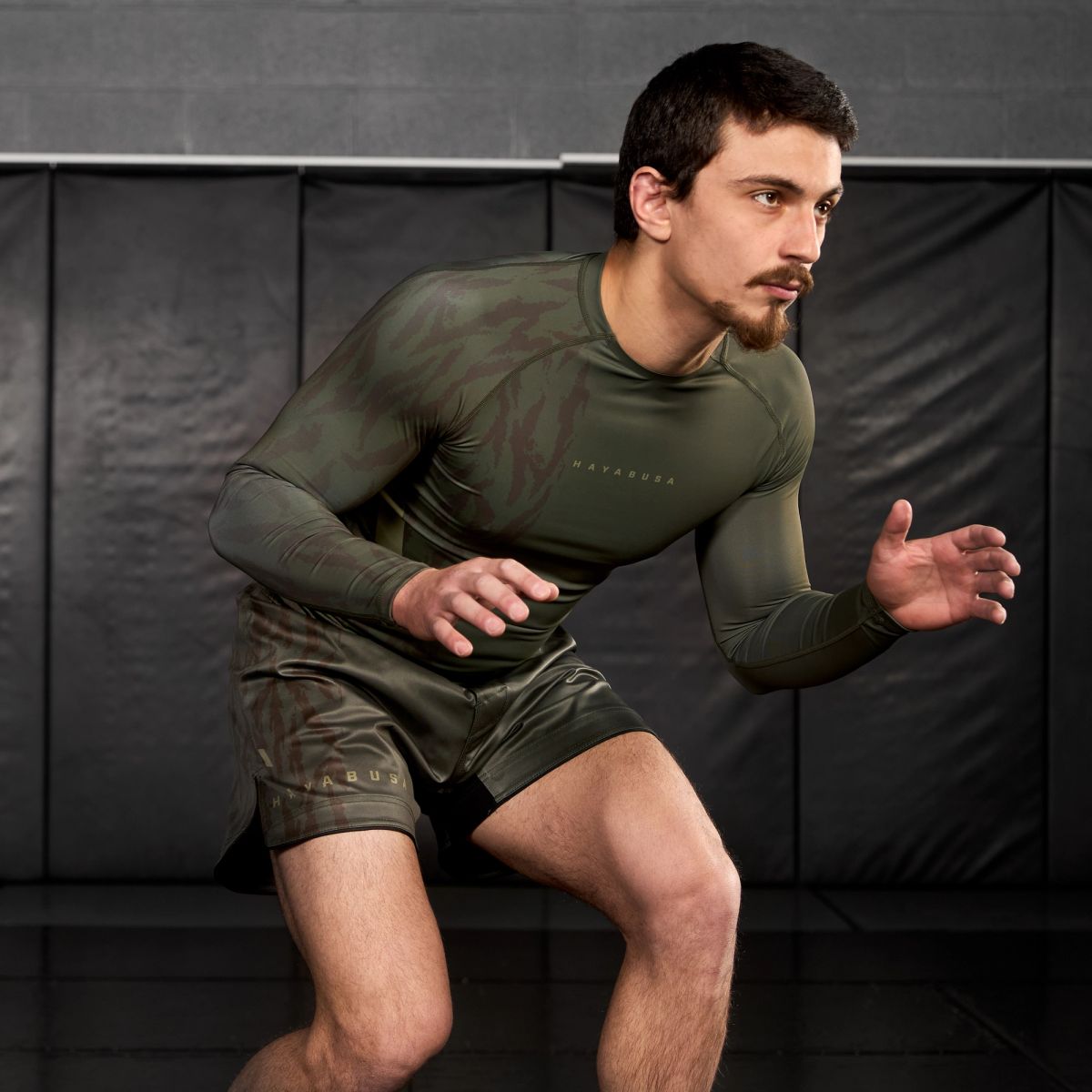
Choosing the Right Rash Guard
Selecting the right rash guard involves more than picking your usual size. Here’s what to look for:
- Measure accurately: Take precise measurements of your chest, waist, and arms. Different brands have unique sizing charts, so double-check before purchasing. Check our guide on rash guard fit for tips.
- Compression vs. loose fit:
- Compression fit: A tight, compression-style rash guard minimizes fabric movement and is ideal for grappling, BJJ, and no-gi training.
- Looser fit: Offers comfort for striking, cardio, or casual workouts, but it may ride up during dynamic drills. Learn more BJJ rash guard tips.
- Material quality: High-quality fabrics retain their shape and elasticity even after repeated washes and intense training, reducing ride-up issues.
- Design features: Look for anti-slip hems, silicone grips, and reinforced stitching to keep your rash guard securely in place. Explore no-ride rash guards.
Training Tips to Keep Your Rash Guard in Place
Even the best rash guards sometimes need a little help:
- Tuck or secure sleeves and hems: Some athletes tuck their rash guards into shorts or use anti-slip tape along the edges.
- Layering: Wearing rash guards under gi tops or shorts with tight waistbands can minimize movement.
- Choose activity-specific designs: Rash guards built for grappling often have extra features to prevent ride-up, while those for striking or casual use focus on comfort.
The Hayabusa Men’s Core Short Sleeve Rash Guard combines a snug fit with anti-slip design elements, making it an excellent option for athletes who want a secure, comfortable rash guard.
Common Mistakes That Cause Rash Guards to Ride Up
- Buying based on size alone: Always consider measurements, stretch, and activity type.
- Ignoring material quality: Low-quality fabrics lose elasticity quickly, increasing ride-up.
- Not considering activity type: A rash guard for striking may not work well for grappling.
Washing incorrectly: Hot water or harsh detergents can damage elasticity, leading to slipping.
FAQ: Rash Guards and Ride-Up Issues
Q: Can I wear a rash guard under my gi?
A: Absolutely! A snug rash guard helps reduce friction, prevents chafing, and adds a layer of hygiene between your skin and gi. However, this is not allowed in many competitive formats.
Q: How do I prevent my rash guard from stretching out?
A: Wash in cold water, air dry, and avoid harsh detergents. High-quality materials also maintain their shape longer.
Q: Should I buy a tighter rash guard to stop ride-up?
A: A compression fit works best, but it should still be comfortable. Too tight may restrict movement or cause chafing.
Q: Are all no-ride rash guards suitable for BJJ and MMA?
A: Look for designs with silicone grips, reinforced hems, and stretch that fits your body type. Some are optimized specifically for grappling.
Built for Better Training
A properly fitting rash guard is essential for focus, comfort, and performance. By understanding why rash guards ride up, choosing the right size, material, and design, and following training and care tips, you can train confidently without constant distractions.
Invest in a high-quality, snug rash guard like the Hayabusa Men’s Core Short Sleeve Rash Guard and experience the difference in comfort, focus, and performance on the mat.